Today, I’m incredibly excited to share that I’m joining PlanetScale.
This is a particularly special move for me. I’ve followed PlanetScale for years—through podcasts featuring Sugu and Sam, the company’s engineering blog, and the work happening across Vitess and the broader database community. Having followed the company’s work for years, I’m excited to now contribute to it as part of the team.
The Path Here
I started my career well over a decade ago as a backend application developer, but soon grew curious about the layers underneath the applications I was building: infrastructure, high-performance software, and reliability at scale. I spent years programming in Java, but my interest extended beyond the language to how the JVM works and its memory model. Around the same time, the first edition of Designing Data-Intensive Applications was published, and I was hooked on distributed systems and databases.
That curiosity led me to infrastructure and platform engineering at Infobip and later Jobtome. While building services in Java, I loved Hazelcast: it exposed a familiar and simple Java Map interface, but under the hood it gave you a distributed in-memory data store. When I started writing Go, I wanted to build something similar, but like many side projects, it was eventually abandoned, though I still have a few ideas I may revisit.
Nearly five years ago, I joined Percona and made distributed systems, databases and infra around those my full-time focus. I began by building Kubernetes operators for MySQL, PostgreSQL, and MongoDB, gaining a close look at both Day 1 and Day 2 operations: deploying complete clusters, scaling them, managing backups and restores, and handling high availability. Working across three very different databases taught me how each one approaches the same fundamental operational problems.
For the past two years, I’ve been a lead engineer on Percona ClusterSync for MongoDB, a zero-downtime synchronization and migration engine for MongoDB clusters. I chose that project because it sits in the world of distributed systems and high performance: consistency, replication lag, parallel data movement, sharding and it has to be fast, as fast as possible. It brought together many of the problems I most enjoy solving and pushed me to grow as an engineer.
I’m deeply grateful to everyone at Percona. I had the opportunity to work alongside genuine database experts, tackle difficult engineering problems, and learn an enormous amount. The experience shaped the engineer I am today.
Why PlanetScale
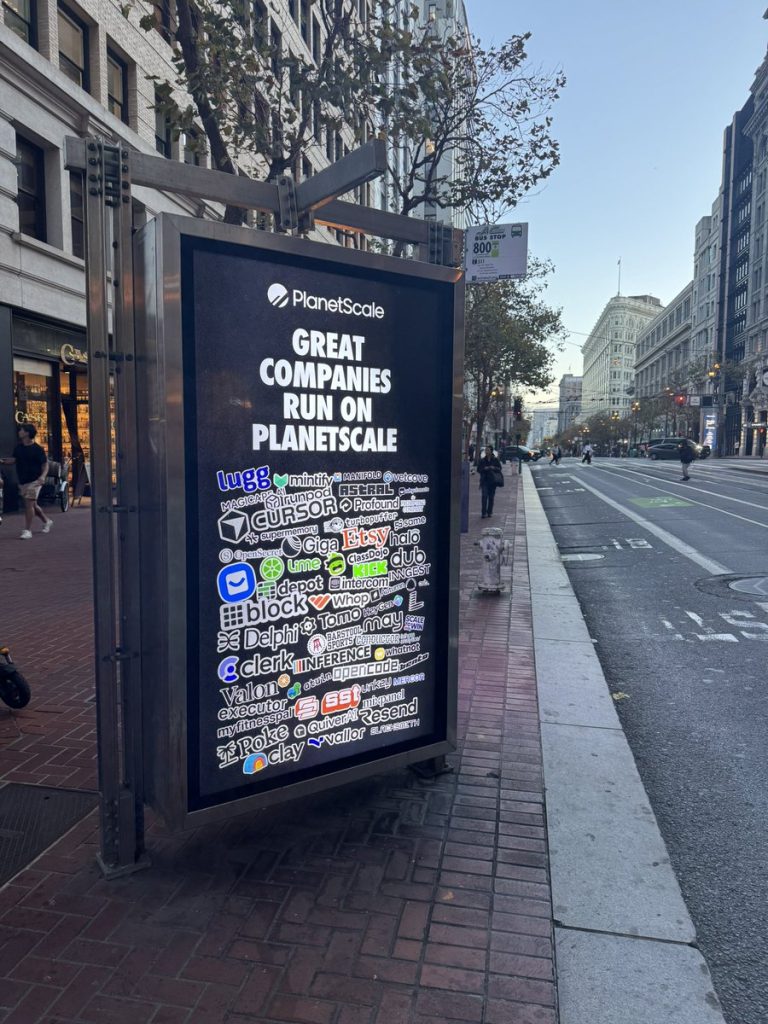
I’ve always been drawn to distributed, high-performance systems, but I also love building things that other developers use. PlanetScale brings those two interests together in a wonderful way.
PlanetScale solves deep database and infrastructure problems while turning that complexity into a product with a simple, thoughtful developer experience. I think of it a little like Go: simple and approachable on the surface, with immense power underneath.
What has always stood out to me about PlanetScale is the evident love for the craft, the blog shows that clearly. The engineering has to work. It has to be safe. It has to be fast. The team goes deep, shares what it learns, and keeps pushing the database space forward—from its work on Vitess, a distributed database system built around MySQL (which will by my focus) to Neki, its next generation of database sharding technology, built from first principles to bring Vitess-level scale and reliability to PostgreSQL workloads.
PlanetScale is also a relatively small team filled with exceptionally talented and specialized people. Joining a group like that is both exciting and humbling. I’m looking forward to learning from engineers whose work I’ve followed for years and contributing my own experience to the work ahead.
Funny enough, PlanetScale is the first company I’m joining that I already knew well before the opportunity appeared. In the past, companies would reach out, I would get to know them through the process, and eventually I would realize that joining could be a good next step aligned with my long-term goals. PlanetScale was different. When the team reached out, the excitement was already there.
There will be plenty to learn, difficult problems to solve, and new systems to understand. I couldn’t be more excited to get started.